Avatu

Edit Template

Author name: avatuavatu

Salesforce

Meet Salesforce Agentforce Help Agent: AI Support That Deploys in Minutes and only charges for Resolutions

Home » Customer support teams are under constant pressure to deliver faster, smarter, and more efficient service. To address this challenge, Salesforce has introduced Agentforce Help Agent—an AI-powered support agent designed to deploy in minutes and charge only for successful resolutions. Unlike traditional AI solutions that require lengthy implementation and ongoing usage costs, Agentforce Help Agent offers a faster path to automation with a results-based pricing model. Businesses pay only when the AI successfully resolves a customer issue, making AI adoption more cost-effective and easier to justify. Key Highlights ● Deploy in minutes with minimal setup, helping teams get value quickly without lengthy onboarding or heavy technical work. ● Pay only for resolved cases, so businesses are charged based on successful outcomes rather than total usage or conversation volume. ● Automate repetitive support tasks such as common customer questions, basic troubleshooting, and standard service requests. ● Provide 24/7 customer assistance, ensuring customers can get help anytime, even outside normal business hours. ● Improve response speed and consistency by using AI to handle routine issues with reliable, predefined support flows.● Reduce operational support costs by lowering the number of simple tickets that require human intervention.● Allow human agents to focus on high-value work, including complex cases, escalations, and relationship-driven support. Why It Matters Agentforce Help Agent helps organizations scale customer support without increasing operational costs. By combining rapid deployment, AI-powered automation, and outcome-based pricing, Salesforce is making enterprise AI more practical and accessible for businesses of all sizes. As customer expectations continue to rise, tools like Agentforce Help Agent enable organizations to deliver faster resolutions, improve service quality, and maximize the value of their support teams. Turn go-live into lasting business success with Avatu’s tailored Automation solutions! Partner with Us! Latest Blog Picks for You 5 Ways Generative AI Will Change How Your Product Team Operates in 2025 Read More > 7 IT Workflow Challenges and How to Overcome Them Read More > Beyond Slack: Why Teams Need Atlassian’s Teamwork Software? Read More > Load More Ready to Transform Your Business? Let’s explore how Avatu can help your business innovate, streamline, and grow. Reach out to our team for a personalized consultation today! Engage With Our Experts

ServiceNow

Transforming Businesses Together: Avatu & ServiceNow

Home » Digital transformation is no longer just about adopting new technology—it’s about creating connected, intelligent, and future-ready enterprises. At Avatu, we’ve been helping organizations achieve this by delivering scalable ServiceNow solutions that simplify operations, improve employee experiences, and drive business growth. Today, we’re proud to announce a significant milestone in our journey—Avatu is now an Official ServiceNow Consulting & Implementation Program Partner. Built on Experience. Strengthened by Partnership. This partnership reflects the experience, expertise, and trust we’ve built over the years. With 210+ successful ServiceNow engagements, 95+ global customers, and 124 ServiceNow certifications, Avatu has successfully delivered digital transformation initiatives across North America, EMEA, and APAC. Our expertise spans diverse industries, including Retail & Manufacturing, Financial Services, Healthcare, Energy, Telecommunications, and Media, enabling us to solve complex business challenges with industry-specific solutions. What This Means for Our Customers Becoming an official ServiceNow partner enables us to provide even greater value through: Faster and more efficient ServiceNow implementations Direct access to ServiceNow resources and best practices Enhanced governance and delivery excellence Early access to platform innovations and AI capabilities Expanded expertise across the ServiceNow ecosystem From IT Operations and Asset Management to Employee Experience, Customer Service, Risk & Security, Custom Applications, and Enterprise Integrations, we help organizations maximize the value of their ServiceNow investment. Driving the Future with AI and Automation At Avatu, innovation is at the core of everything we do. We continue to invest in AI-powered automation, GenAI capabilities, intelligent workflows, and industry-focused accelerators that help businesses improve productivity, enhance customer experiences, and accelerate digital transformation. Backed by proven delivery frameworks, functional expertise, and a customer-first approach, we remain committed to delivering measurable business outcomes. Looking Ahead This partnership marks the beginning of our next phase of growth. Our vision is to become the trusted strategic transformation partner for enterprises worldwide—helping them unlock the full potential of the ServiceNow platform through innovation, automation, and continuous value creation. The partnership is official. Our commitment remains unchanged—to deliver smarter, faster, and future-ready digital transformation experiences for every customer. Avatu Partners ServiceNow Contact us Latest Blog Picks for You Why is the ServiceNow Platform Essential for Modern Business Operations? Read More > What Is ServiceNow? A Simple Guide to a Platform Read More > Atlassian vs ServiceNow: Choosing the Right Workflow Platform Read More > Load More Ready to Transform Your Business? Let’s explore how Avatu can help your business innovate, streamline, and grow. Reach out to our team for a personalized consultation today! Engage With Our Experts

ServiceNow

How Salesforce Helps Small Businesses Manage Leads, Customers, and Follow-ups?

Home » For most small businesses, growth begins with excitement but turns into a nightmare. At first, new inquiries coming in from customers, generating new quotes, multiple leads in the pipeline may look promising but quickly create confusion and chaos. Businesses usually have various channels from which a lead may come into their knowledge that includes websites, phone calls, WhatsApp messages, emails, etc. All these leads might be managed by multiple individuals or a single individual using multiple setups. This is a common practice among growing businesses. Although it is not a problem at first glance, the growing businesses must outgrow manual tracking. Small businesses often start with spreadsheets, email inboxes, sticky notes, and personal reminders that are simple and easy to use, but as leads, customers, and follow-ups grow in number, the system might become difficult to manage and create bottlenecks. That is where Salesforce can make a major difference. Salesforce helps small businesses manage leads, customers, and follow-ups from one connected CRM platform. It collects all the scattered information and presents it in a single dashboard, which eliminates manual updates. What is Salesforce for Small Business? Salesforce is a customer relationship management platform that is commonly known as CRM. It helps businesses of all sizes working in various industries to manage leads, customer information, sales opportunities, service requests, marketing activities, etc. For small businesses, Salesforce provides a way to organize customer relationships without depending on a number of tools. It helps teams truly optimize their full potential and may even help in the growth as well. Any business, be it a multinational company or a small business, can use a large list of Salesforce tools to track a lead from the first inquiry to the final deal. It can store customer contact details, notes, calls, email communication, meeting outcomes, quotations, and follow-ups as well. Due to the rise in the number of small businesses worldwide, the Salesforce has come up with a special plan for small businesses that allows them to enjoy the world-class tools of Salesforce at the fraction of cost. When Should a Small Business Start Using Salesforce? A small business must consider a Salesforce when customer and sales information becomes difficult to manage using traditional or manual workflows. If your business is also missing follow-ups, repeated customer questions, unclear sales pipeline, or too many spreadsheets to manage the leads, which results in delayed responses and duplicate customer records, then it is the right time to consider Salesforce. Another sign that helps businesses identify the right time to consider Salesforce is when the business owner becomes the only person who knows everything regarding the business. If all customer updates depend on one person’s memory, then the business becomes impossible to scale. Salesforce is highly useful when a small business is planning growth. If a business is hiring salespersons or expanding to new locations or launching marketing campaigns or handling more customer inquiries, then a CRM must be the foundational platform for the whole organization. Experience Servicenow the right way with Avatu Start Today! Best Practices for Small Businesses Using Salesforce Before any business opt for a platform like Salesforce, they must start with a clear goal and clear processes. When first starting, a business must not implement every feature at once. A business should begin with the most important needs such as lead tracking, customer records, follow-up tasks, or sales pipeline management. Once they are familiar with all the features that they have already started using, this is the right time when they should look for other features or processes as well. Regardless of the stage of the implementation, a business must keep all the systems simple. A CRM should make work easier, not complicated. All the fields, stages, workflows should match the way the team usually sells and serves the customer. Be it Salesforce or any other CRM, they are here to assist you and automate the workflows. A business must make sure its data is clean and consistent, its processes are seamless. A CRM, regardless of being world-class, cannot fix a broken system. How Avatu Can Help Small Businesses with Salesforce Salesforce is one of the most powerful tools, but the true value of the tool can only be extracted if it is implemented by experts. A small business does not need a complicated setup. Whatever the setup is, it must be easy to understand, that perfectly aligns with the existing practices of the team and business. Avatu has years of experience helping small businesses set up Salesforce in a practical and more scalable way. This includes configuring the platform to capture and manage leads, Customer records, sales pipeline, follow-up workflows, dashboards, automation, and user roles. The goal of implementation is not just to install the Salesforce, but to make the platform useful for everyone involved in the business operations. With the right implementation approach, any business can take the best benefits of the platform by reducing manual work and gaining better sales visibility. Conclusion Small businesses usually grow through relationships, trust, and personalised timely actions. But this growth for small businesses sometimes comes with various challenges. Leads may get missed, follow-ups get delayed, customer information becomes scattered, and managers lose visibility. Salesforce for small businesses resolves these challenges by giving small businesses one connected platform where they can manage their leads, customers, and follow-ups. Starting from capturing the lead, the platform allows businesses to assign ownership, track conversations, schedule next steps, view customer history, and make decisions with better live data. For small businesses, this may create a major shift. Instead of reacting to scattered updates, the teams can work with clarity and a structure on a world-renowned platform. Rather than depending on the memory of the team members, the business can follow a reliable processor. Turn go-live into lasting business success with Avatu’s tailored Automation solutions! Partner with Us! Frequently Asked Questions (FAQs) 1. Is Salesforce suitable for small businesses? Yes, Salesforce is designed to support businesses of all sizes, including

ServiceNow

How ServiceNow ITAM Helps Businesses Control Costs and Assets?

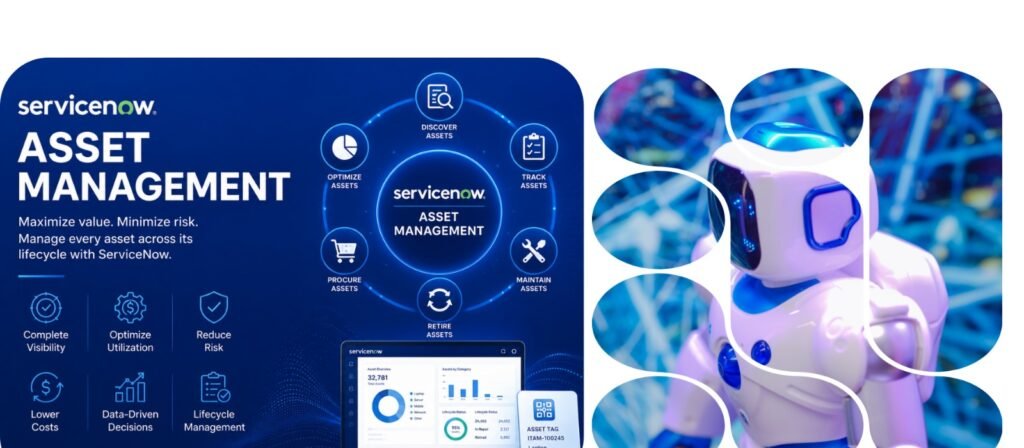
Home » Managing IT assets has become more complicated in 2026 compared to 2015 or even 2015. Back in the day, businesses mostly had to track their desktops, servers, laptops, and software licenses. This was more than enough for any business to maintain the track of its assets. The time has changed now and the landscape is much wider. Companies are dealing with tons of new developments, including remote devices, cloud subscriptions, SaaS tools, mobile assets, security tools, virtual machines, warranties, renewal dates, contracts, etc. At the same time, it is not limited to enterprises or multinational companies. In fact, small businesses are also juggling the same issues. This is where ServiceNow IT Asset Management, popularly known as ServiceNow ITAM, truly becomes useful. IT asset management in ServiceNow can help businesses bring structure, visibility, and automation into managing the entire asset lifecycle instead of simply tracking assets after purchase. ServiceNow may also help organizations plan, procure, Deploy, use, optimize, maintain, and retire these assets. What is IT Asset Management in ServiceNow? In ServiceNow, IT Asset Management is the process of managing all the hardware, software, cloud, and technology-related assets of a company in a single platform. This allows businesses to centralize ways of tracking assets, understanding their usage, managing costs, reducing risks, and even automate everyday asset management. In simple words, ServiceNow ITAM helps answer questions like: What assets do we own? Where are they located? Who is using them? Are we paying for unused software? Are any assets nearing end of life? Are licenses compliant? Are contracts and warranties still valid? Can we reduce unnecessary technology spending? Without using any IT asset management tool, these questions are often unanswered for businesses or they are answered manually, which costs a lot of precious time. Teams may depend on spreadsheets, email approvals, purchase records, etc. that delays the whole process and wastes the time that could have been used to bring more business into the company. Why Businesses Need Better IT Asset Management These days, every business is using technology to deliver its services, but not every business manages technology assets efficiently that may help in the growth as well. This may not be a big challenge for microbusinesses, but as businesses grow, IT assets increase across departments, locations, and users. This growth in IT assets creates several problems. First of all, it increases the cost silently. A business may continue paying for software licenses that no one uses, or it may buy new hardware while usable devices are still unassigned and sitting in storage. Second, the compliance risk becomes harder to manage as software vendors may conduct audits, and the organizations that do not have accurate license data may face penalties or unexpected costs. Experience Servicenow the right way with Avatu Start Today! How ServiceNow ITAM Helps Control Costs ServiceNow IT asset management tool offers various advantages, and one of those is cost optimization. Technology spending can easily become one of the largest operational expenses for any business in the world, but with the right tool, it can be managed. Tools like ServiceNow IT Asset Management does not just provide you with the list of IT assets that a business might have, but it also reduces unnecessary spending in various forms. Managing Software Assets with ServiceNow It can identify unused or underused software licenses that might be costing a fortune to a company. Software Asset Management, also known as SAM, is another important part of ServiceNow IT Asset Management. Hardware might be harder to purchase for a company due to its strong policy, but buying new software licenses or subscriptions is one of the most common ways businesses lose tons of money. Without a proper software asset management process or tool, businesses may overbuy licenses or underuse subscriptions, or accidentally become non-compliant, which is a pretty common instance. Managing Hardware Assets with ServiceNow Secondly, it can support better hardware planning and instead of buying new laptops every time a request comes in, it may check if the IT team has the relevant stock and reuse the devices for better efficiency. When a new employee joins a company that offers laptops or other hardware, it doesn’t always have to buy those devices. Depending on the size, age, and policy of the company, there could be similar hardware already available in the stock that has not been assigned to any other employee. Purchasing the same asset twice has no real value but a burden on the business. Benefits of ServiceNow IT Asset Management ServiceNow IT Asset Management offers several business benefits Better Visibility: Businesses gain a clearer view of hardware, software, and cloud assets across the organization. Cost Control: Teams can reduce waste, reclaim unused assets, avoid duplicate purchases, and make smarter renewal decisions. Improved Compliance: Accurate software and asset data helps reduce audit risks and supports stronger governance. Automation: Routine tasks such as approvals, assignments, updates, reminders, and asset retirement processes can be automated instead of managed manually. Better Employee Experience: Faster and more organized asset workflows ensure employees receive the tools they need with fewer delays. Improved Decision-Making: Leaders can use asset data to plan budgets, forecast future needs, negotiate with vendors, and align IT investments with business objectives. Turn go-live into lasting business success with Avatu’s tailored Automation solutions! Partner with Us! Frequently Asked Questions (FAQs) 1. What is ServiceNow IT Asset Management? ServiceNow IT Asset Management is a solution that helps businesses manage hardware, software, cloud assets, SaaS tools, contracts, warranties, and other technology resources in one centralized platform. It helps organizations track asset ownership, usage, cost, lifecycle status, and compliance more efficiently. 2. Why do businesses need ServiceNow ITAM? Businesses need ServiceNow ITAM because managing IT assets manually through spreadsheets, emails, and purchase records can become slow, inaccurate, and costly. ServiceNow ITAM improves visibility, reduces unnecessary spending, supports compliance, and automates routine asset management tasks. 3. How does ServiceNow ITAM help reduce costs? ServiceNow ITAM helps reduce costs by identifying unused or underused software licenses, avoiding

Uncategorized

How JSM and ATC Help Modern Teams Deliver Faster, Smarter Service?

Home » Modern businesses are under constant pressure to deliver faster results without any operational delays and keep the teams aligned across departments. Whether we are talking about IT department or HR or customer service, the teams are expected to respond quickly and maintain quality. Despite all that, service delivery in many organizations is still scattered across emails, spreadsheets, chat messages, and disconnected tools that create delays in follow-ups, poor tracking, frustrated employees, etc. This is the point where Jira Service Management and Atlassian Teamwork Collection can play a powerful role to help organizations move from reactive support to connected, collaborative, and AI-based service delivery. Businesses that are looking to advance and modernize their workflows, Avatu can help them design, implement, and optimize various Atlassian solutions that align with their business and offer long-term sustainability. What Is Jira Service Management? Jira Service Management is Atlassian’s one of the most popular service management tools that is designed to help teams deliver service at high velocity. The platform positions Jira Service Management as an overall solution for delivering better experiences for employees and customers across departments in an organization. Jira Service Management allows businesses to manage various day-to-day activities in an organization that includes requests, incidents, changes, problems, assets, service level agreements, from a centralized platform. While it is mainly used by the IT teams worldwide, it is not limited to the IT department as various departments including HR, finance, legal, and operations can also use Jira Service Management to structure and improve their service delivery. Key Capabilities of Jira Service Management Jira Service Management offers various capabilities that can help an organization improve its service quality and operational efficiency. Request Management allows businesses to create service portals where team members can submit requests through simple forms. These requests are later routed to the right team and help agents for faster resolution. Incident management helps organizations respond to service disruptions faster than ever before. Teams can log incidents, assign responders, track updates, and escalate when required for faster resolution. Change management offers controlled changes with proper approvals, audit trails, and risk assessments, especially for IT teams where managing infrastructure, applications, and supporting business is a critical part of their profile. Automation is among the strongest capabilities of Jira Service Management. It is the need of the hour and repetitive actions such as ticket assignment, follow-ups, and status updates should be automated for faster response. Experience Atlassian the right way with Avatu Start Today! What Is Atlassian Teamwork Collection? While Jira Service Management focuses on service delivery, at the same time Atlassian teamwork collection focuses on collaboration across departments in an organization.Atlassian Teamwork Collection is a way to bring key teamwork tools together that includes Loom, Rovo, Jira, and Confluence. All these tools offered by Atlassian perform a specific task that focuses on better collaboration. Jira: flexible project management Confluence: a place for knowledge Loom: quick asynchronous video updates Rovo: AI-powered apps driven by team knowledge. The teamwork collection is among the most important toolset as service delivery rarely happens in isolation. Different teams across departments use a number of tools and perform various tasks to deliver any service. Organizations can use the capabilities of Atlassian Teamwork Collection to connect learning documentation, communication, and other essential tasks in one single ecosystem. Together, these tools support a more transparent and collaborative way of working. How Jira Service Management and Teamwork Collection Work Together Jira Service Management and Atlassian Teamwork Collection are two of the most powerful tools when used together for any business regardless of size and industry. For example, an employee needs help with its laptop. Instead of sending an email to the IT team, the employee can submit a request through Jira Service Management Portal, which will route the request to the right queue and assign an agent for that. If a solution already exists, the employee may find a Confluence knowledge article before even creating a ticket for the specific issue. In this situation, various tools are going to play a part to resolve the issue as early as possible. For example, Jira can be used to track the incident, assign responders, and manage escalations, while Confluence can be used to maintain incident notes, post-incident reviews, etc. Loom can be used to record quick updates for leadership or different teams. This is how an interconnected system works that resolves issues faster because the information does not get lost across tools. Everyone can see what is happening to a ticket and who is responsible for resolution. The same approach applies to teams beyond the IT department. For example, HR teams can manage onboarding requests, finance teams can handle approved timesheets, facilities can manage maintenance requests, and operations can manage internal service records. By combining both the tools, an organization can create a full-service lifecycle that can automatically take requests, assign tasks, track progress, offer strong collaboration, perform documentation, and resolve issues. Where Avatu Can Help Tools like Atlassian are worthless if not implemented by an expert. For a successful implementation, a right strategy, process design, configuration, integration, governance, training, and ongoing optimization is required. Avatu helps organizations get the most out of both the services and other tools offered by Atlassian. We align the best technology with business requirements, implement digital transformation tools be it Jira Service Management, Atlassian Teamwork Collection, or any other tool. We have years of experience in implementing various digital transformation tools and services in organizations to help them transform their workflows. With the right experience, we can play a key role in optimizing these tools and provide the best benefit out of these tools to our customers. Turn go-live into lasting business success with Avatu’s tailored Automation solutions! Partner with Us! Frequently Asked Questions (FAQs) Q1. What is Jira Service Management used for? Jira Service Management is used to manage service requests, incidents, changes, approvals, SLAs, and internal support workflows. It helps IT, HR, finance, facilities, and other business teams deliver faster and more organized service

ServiceNow

Post-Sales Is the Growth Engine: ServiceNow AI is Rebuilding Customer Success

Home » Most companies, including service-based companies, still treat sales as the finish line and mark of their success. Once a deal is closed and revenue is booked, the sales teams consider their job well done. For other businesses, that might be the best-case scenario, but in subscription-based services, that should not be the target. Once a new customer has signed up in a subscription-based business, the real challenges begin for the business. Recurring revenue models has fundamentally changed how a value is created. Companies with subscription-based models should focus on keeping the customers subscribed to their services. If customers in a subscription-based model fail to realize the real value of their subscription, the revenue doesn’t just plateau, it usually erodes. That is why post-sales service is no longer a support function but the core operating system of sustainable growth in these kinds of businesses. Yet, most organizations are not designed to execute this fundamental function. The Structural Failure of Post-Sales Teams In subscription-based systems, customer success teams are expected to be proactive, loaded with data, and strategic to ensure greater satisfaction. On paper, this may look very simple, but systems might make it impossible. Across industries, post-sales teams face three systematic constraints. 1. Fragmented Data Across Systems Scattered data across systems create one of the biggest issues for customer success teams. Usually, customer data is scattered across platforms that include product analytics tools, CRM platforms, ERP systems, etc. Individually, these tools are good, but they are not the best when it comes to helping customer success teams. These systems are rarely synchronized in real-time, that does not show the real picture to the customer success team. 2. Disconnected Teams Across the Lifecycle Disconnected teams across the lifecycle are one of the biggest issues for any company, let alone a subscription model. For a successful subscription model, sales, onboarding, support, and customer support team must operate as a single entity. This collaboration can eliminate common issues that include loss of context, inconsistent customer experiences, and delayed responses. 3. Reactive Instead of Proactive Execution Teams with scattered data and not having a structural platform become reactive instead of proactive. Customer success teams and managers should spend more time on focusing customers and their problems rather than gathering data, preparing reports, or chasing internal updates. These tasks should be automated. ServiceNow’s Approach: Fix the System, Not the Symptoms Similar to other organizational problems, ServiceNow treated this as an operating model problem to help service-based organizations to become the best. Instead of hiring more resources or adding more dashboards, ServiceNow has made a strategic decision to run customer success on the ServiceNow AI platform itself. This has redesigned post-sales around three tightly integrated capabilities that includes: Connected workspaces for unified visibility AI embedded into workflows for execution at scale A real-time data foundation to eliminate fragmentation This approach hasn’t just improved the efficiency, but fundamentally changed the way of working for customer success teams and subscription-based models. 1. Unified Workspaces: A Single Operational View of the Customer By unifying workspaces, ServiceNow has created a single operational view of the customer data is technically the first step in transforming post-sales success. The platform has been addressed through personalized and role-based workspaces that bring together product adoption metrics, customer case history, customer sentiment signals, and renewal timelines. 2. AI as the New UI: From Insight to Action Most companies around the world use AI as a reporting layer that focuses on generating dashboards, forecasts, or summaries. ServiceNow treats AI completely differently as AI is embedded directly into workflows as an execution layer. This gives various advantages to the platform, and the teams can: Instantly generate account briefings Detect risk patterns across customer data Receive recommended next actions Automate routine engagement tasks Using the new capabilities of ServiceNow AI platform, Customer Success Manager can instantly access different data at a single dashboard for better risk and opportunities. What took, what once took hours to pull data from multiple systems and analyze or build a presentation can be done in just a few clicks. 3. Workflow Data Fabric: The Foundation of Everything Workflow data fabric is the foundation of this solution, and none of the above is going to work without solving the most fundamental problem. ServiceNow addresses this through its workflow data fabric, which is a unifying layer that connects data across systems. Without interconnected layers, AI can produce incomplete insights that can worsen the situation as teams operate with conflicting context, and can cause numerous problems. With the help of workflow data fabric, everything gets interconnected and teams can access data at a single dashboard and context flows seamlessly across teams. Experience ServiceNow the right way with Avatu Start Today! RaptorDB and Real-Time Intelligence To support this level of orchestration across teams and data points, ServiceNow relies on RaptorDB. It is a high-performing hybrid database that is designed to handle transactional workflows and analytical workflows simultaneously. This hybrid database can enable real-time customer health scoring, instant detection of portfolio-wide risks, and fast querying across massive datasets faster than ever before. It is highly important to have a hybrid and faster database, as post-sale success isn’t about managing a few accounts, but orchestrating thousands simultaneously without losing precision. Is This Solution Even Practical? Yes, this solution is 100% practical. There are bunch of platforms claiming to have the similar kind of claims, but the ServiceNow has achieved: ~2,000 employees using the system daily Over $6.9 billion in annual contract value managed A 98% renewal rate This is the data point presented by the ServiceNow itself and the tip of the iceberg. The real shift is qualitative. Teams can operate with a shared real-time context, and AI reduces friction in decision-making. This results in customer interactions becoming consistent and proactive. Closing Perspective: Autonomous Customer Success Post-sales is evolving from a human-driven function to a system-driven capability where artificial intelligence can anticipate the needs of the organization and create workflow coordination as per the requirements. In a

Uncategorized

Tier 1 vs Emerging Companies: Which one is Best for New Workforce?

Home » For decades, working in a Tier 1 company was widely considered to be the safest and rational choice for anyone’s career. In fact, societies like India forces its youngsters to work only in tier-1 companies that usually offer structured growth and stability. At the same time, emerging companies were often viewed as high-risk and uncertain career choices. Usually limited to people who could not join tier 1 companies or looking for a huge salary package. The situation has changed worldwide. Due to the fast-paced technical revolution, professionals are leaning towards gaining more skills and experience rather than sticking with any stable organization. Nowadays, career value is measured not only by organizational prestige but by the learning curve and work satisfaction of an employee. Though, larger organizations or Tier 1 companies are still offering stability with its long history, but emerging companies are also offering a wide range of advantages to its workforce. Tier-I Companies: Scale, Structure, and Strength Tier 1 companies are the biggest companies in any sector or industry. They are built to operate at scale and deliver consistent outcomes over long periods of time. Reliability and repeatability are their biggest strengths. Where Tier-I Companies Create Real Value 1. Operational Stability and Governance Large organizations are known for their operational stability and governance as they are specially designed to survive volatility. They typically have established revenue streams, compliance frameworks, and layered design making to ensure continuity even during industry-wide economic hardship. 2. Clearly Defined Roles and Expectations Tier 1 companies usually excel at role clarity that includes job responsibilities, reporting structures, performance metrics, and promotion criteria. All these things are well documented that reduces ambiguity. 3. Structured Learning and Standardization Large organizations also offer training programs, internal certificates, and process documentation to ensure consistency of knowledge and execution. This can be a valuable lesson for early professionals. Emerging Companies: Learning, Ownership, and Career Compounding Emerging companies operate in totally different conditions compared to a tier one organization. They are built and known for their speed, experimentation and adaptation. Most of these companies operate on momentum. What Emerging Companies Do Differently 1. Faster and Broader Learning Compared to a tier-one organization, roles in most emerging companies are usually not confined to a single function. Team members are made aware of strategy, execution steps in the organisation at every phase, and customer realities regardless of their role. In fact, 57% of Gen-z employees believe upskilling is far more important in career growth compared to salary hike or promotion. That percentage shoots to 87% when we talk about the professionals in creative fields such as Arts, Animation, etc. 2. Clear Ownership and Visibility Compared to a Tier 1 organization, ownership of any project or task is clearly visible in an emerging company. Individual contributors are more appreciated in these organizations for their good job. This results in clear accountability that can accelerate professional maturity. 3. Faster Feedback and Execution In emerging organizations, ideas move quickly from discussion to implementation. A creative professional or a high-performing professional with new ideas don’t have to wait or follow a certain procedure to pitch their ideas. Emerging organizations fast at adapting new ideas as they usually run on momentum. Experience ServiceNow the right way with Avatu Start Today! Avatu: An Example of an Evolving, Emerging Company Avatu is a prime example of an emerging company that is bridging the gap between agility and structure. We use a unique approach where growth is pursued without sacrificing clarity, accountability, or professionalism.Key aspects of Avatu’s operating model include: Clear expectations and ownership without unnecessary bureaucracy for Structured Flexibility. Emphasis on market relevant skills rather than hierarchical progression for skill first career development. Open communication around priorities, performance, and growth paths for transparency in decisions. Team members are encouraged to think beyond job descriptions and contribute to ownership-oriented culture. We believe career growth and security comes from skill relevance, ownership and adaptability not from the organization’s size alone. Learning is the true path to stay relevant and thrive in today’s fast pacing technological world. Avatu encourages its employees to build market-facing relevant skills that compound over time that ensures professional growth as technologies and roles change. Conclusion: Best-Fit, and Best-Evolving Tier 1 companies are good at providing career security with its well-defined processes, but emerging companies are also catching up. Organizations such as Avatu prioritize skill relevance, ownership, and adaptability over tenures and titles when it comes to growth. In today’s environment where most of the workforce is young individuals, these professionals are looking for what fits best for their goals. Yes, Tier 1 organisations are still leading the industry and are the default choice of newbies, but emerging companies are also offering faster growth versatile skill development, and holistic experience of real-life working environments. The choice between a Tier-I company and an emerging company should no longer be driven by size or legacy alone. It should be guided by modern career values such as work satisfaction, continuous learning, and long-term skill relevance. Both options are the best provided the professional knows the reason of joining them. Tier 1 companies offer stability and has well defined process, while emerging company offers holistic experience for long term career growth and career security. Turn go-live into lasting business success with Avatu’s tailored Automation solutions! Partner with Us! Latest Blog Picks for You 5 Ways Generative AI Will Change How Your Product Team Operates in 2025 Read More > 7 IT Workflow Challenges and How to Overcome Them Read More > Beyond Slack: Why Teams Need Atlassian’s Teamwork Software? Read More > Load More Ready to Transform Your Business? Let’s explore how Avatu can help your business innovate, streamline, and grow. Reach out to our team for a personalized consultation today! Engage With Our Experts

Salesforce

Why Salesforce Implementations Fail (Even With Good Tools)?

Home » Salesforce is one of the most popular enterprise platforms available worldwide. It is known for its flexibility, scalability, and continuous evolution. Despite all these capabilities, a significant number of businesses fail to get the best out of the platform. The main reason behind failure of a world-class platform like Salesforce is its implementation. In most cases, businesses select the best platform, but they fail to implement it to get the best out of it. A large number of organizations often invest heavily in licenses, integration, and customizations, but don’t opt for good Salesforce consulting services to implement it as per the requirements and the benefit of the organization. That is why today we are here to discuss why implementation of Salesforce is more important than investing heavily in licenses or integrations, to avoid the same mistake other organizations are making. Salesforce Is Not the Problem, Implementation is Before moving on to the major points which cause failure of implementation of Salesforce, let’s settle that Salesforce is not the problem. Salesforce is one of the best platforms out there, but it’s not a plug-and-play product. It is a platform that must be implemented and adopted by professionals with years of experience. Organizations that have successfully implemented Salesforce treat it as a long-term operating system for its customers and business data. It is a reflection of how work should flow in an organization and not how it accidentally evolves. Failure #1: Automating Broken Processes An already broken process is one of the most common reasons why Salesforce implementation fails in an organization. The platform itself does not fix unclear processes, it amplifies them. In order to implement Salesforce perfectly, an organization must have a clear and well-defined process, as unclear ownership and undefined process may cause future issues even after investing heavily in implementing Salesforce. As established before, successful implementation begins with a clear process. This is where our experienced Salesforce consulting services can be a gem in implementation. With our years of experience in implementation, we configure the platform as per the needs and governance of the organisation. Failure #2: Treating Salesforce as an IT Project A lot of organizations fail to get the best out of Salesforce due to treating it as an IT project. Yes, Salesforce does touch departments like sales, marketing, customer service, operations, and leadership reporting, but it’s more than an IT project. Implementation is the soul of making it success or failure in an organisation. In our years of experience, we have found that collaboration of operations and IT can make Salesforce implementation smoother and useful for the whole organization. Failure #3: Over-Customization Too Early There is no doubt Salesforce is highly customizable, but that must not be misused. Many organizations start customizing Salesforce before even understanding its true capabilities. Building logic to replicate old habits is not going to create a successful implementation. In fact, it will create a huge number of challenges. By not defining processes before implementation can lead to fragile configurations, but also create high maintenance overheads and upgrade challenges. This is a big issue for organizations that are highly regulated or have complex environments like education and manufacturing. That’s why we recommend using our Salesforce Education Cloud implementation services to educational institutes. Failure #4: Ignoring Change Management and Adoption Many organizations usually ignore change management and clean adoption. It is not their fault, but consultants don’t guide organizations in implementation. Implementation teams usually follow company guidelines while organizations assume that training sessions are more than enough for good adoption and going live is equivalent to success. That is not the reality and good practice when implementing a new tool. All departments in an organization regardless of the industry must come together to adopt a new tool which changes the whole working in an organization. Whether it’s the sales department or operations or team leadership, they must come together for successful implementation and future updations. Experience ServiceNow the right way with Avatu Start Today! Failure #5: Choosing the Wrong Implementation Partner Last but not least, not all implementation partners are the same, and choosing the wrong implementation partner can jeopardize the whole adoption. A huge number of implementation partners focus on speed over sustainability and going live over long-term value. This strategy might be in favor of the implementation partner, but it often results in a system that is not technically sound and is bound to fail. At Avatu, we focus on process rationalization, scalable architecture, business alignment, and long-term governance through our Salesforce consulting services. At first glance, this might look overkill, but this is the key to successful implementation of Salesforce or any other workflow platform in an organization. Final Thoughts: Implementation Matters More To conclude, we can safely say that Salesforce fails in an organization, not because of its own fault, but because of lack of understanding and underestimating the complexity of change by the organization itself. Salesforce can be a powerful tool to enable scale, visibility, and operational maturity only if it is implemented by supportive leadership, realistic expectations, and clear processes. Even the most expensive tools cannot fix a broken system. Always remember, even the most expensive tools cannot fix a broken system. Keeping that in mind Avatu offers Salesforce Consulting and Implementation services to save organisations of all sizes from these issues and implement the platform in a safe and useful manner. Turn go-live into lasting business success with Avatu’s tailored Automation solutions! Partner with Us! Frequently Asked Questions (FAQs) Q1. Why do Salesforce implementations fail even though Salesforce is a powerful platform? Salesforce implementation usually failed due to poor process. The implementation team without any clarity often opts for weak adoption strategies that results in misalignment between business needs and implementation. Q2. Is Salesforce implementation an IT responsibility or a business responsibility? Salesforce implementation is a business transformation initiative. An organization must not put the whole responsibility on just one team as it is going to impact the whole business. We recommend

Atlassian, ServiceNow

Atlassian vs ServiceNow: Choosing the Right Workflow Platform

Home » Businesses these days have an abundance of digital tools to make their work easier. Despite that, a number of businesses are struggling, not due to incompetency or bad tools, but due to bad workflows. Requests stuck in inboxes, approvals stuck in silos, and visibility disappearing the moment the company decides to scale. That is why focusing on workflow platforms is more important, and choosing the right tool can make a huge difference. Atlassian and ServiceNow are two of the most dominant names as they both are highly powerful and have already proven their usefulness in a number of multinational organizations. Our blog will highlight the practical decision-making and a useful guide to help businesses select the platform depending on their requirements. So let’s dive deep into these platforms. What Do We Mean by a “Workflow Platform”? Before we move to comparing both the platforms, let’s clarify what a workflow platform actually does. In simple words, a workflow platform manages how work moves from request to action, resolution and documentation. It generally includes: IT service requests and incidents Customer or internal approvals Asset and change management Cross-team handoffs Exception handling and escalations As an organization grows, existing workflows become harder to manage through emails, spreadsheets, or disconnected tools. A workflow must have a simple structure, visibility, accountability, and automation for it to work in an emerging organization. That is where platforms like Atlassian and ServiceNow come to play. Atlassian: Built for Team-Driven Workflows Atlassian is one of the preferred and widely accepted workflow platforms for software development teams. These teams highly value speed, autonomy, and collaboration over other features. Over time, Atlassian platform and its tools has expanded into various IT service management and not just limited to the software development teams. How Atlassian Approaches Workflows Jira along with its various tools enable organizations to design workflows that reflect how they actually work rather than using a standard industry-wide process. Atlassian workflows are typically: Decentralized: Different Teams in an organisation own and configure their own processes Flexible: Workflows can expand quickly in an organisation without any heavy governance Tool-centric: Each of its product including Jira, Confluence, and JSM solves a specific problem well Where Atlassian Works Best Atlassian is known for its unique product named Jira. Most organizations adopt Jira first and later add other products over time to develop a broader ecosystem. Atlassian performs exceptionally well in environments where: Teams move fast and iterate frequently Collaboration matters more than rigid process control Engineering, product, and agile practices are central Workflow maturity is still evolving ServiceNow: Built for Enterprise-Grade Operations ServiceNow is a world-renowned platform which is specially designed for large enterprises that allows them to manage their complex IT operations. Platforms solely focus on control consistency and governance in an organization. How ServiceNow Approaches Workflows Servicenow workflows are mostly centralized, governed, and process-driven. It is a single platform that manages workflows across departments for strong role-based access, approvals, and audit trails. From day one, ServiceNow encourages organizations to standardize their workflow for better implementation rather than empowering teams to define their own ways of working. ServiceNow is highly effective when compliance, audibility, and risk management are the priorities of any organization while multiple departments depend on shared workflows. The large scale of any organization introduces complexity that must be controlled via simple solutions. Experience ServiceNow the right way with Avatu Start Today! Choosing the Right Platform: A Practical Decision Framework Selecting one platform can be overwhelming for any organization as we see a lot of businesses asking the similar question, “which platform is better?” Our Servicenow and Atlassian Consultants always focus on what are the needs of an organization, and where that organization is heading in the future. Atlassian Your organization may choose Atlassian if your teams need autonomy and flexibility, while speed of execution is a competitive advantage. At the same time, your processes are evolving rapidly and collaboration is more important than a central control. ServiceNow ServiceNow is perfect for an organization which needs operational consistency while regulatory or audit requirements are non-negotiable. Scale has already introduced complexity in an organization and leadership needs centralized visibility. The choice of selecting a platform totally depends on the needs of an organization. Neither choice is wrong and they both work perfectly in their own sphere. In fact, both platforms can even coexist in an organization when integrated thoughtfully. Conclusion: ServiceNow and Atlassian both are world-class platforms, but they have their own pros and cons. The decision of selection should not be solely based on technology, but the specific needs of an organization. The most successful organizations are not those who pick the most popular or powerful platform, but those who choose the right one that perfectly aligns with their culture, maturity, and long-term view. On one hand, Atlassian offers a great collaboration platform, while ServiceNow offers accountability. Most organizations use Atlassian for product delivery, collaboration, and agile execution, while ServiceNow is typically used for IT operations, governance, and service management. There is no hard and fast rule on which service team is best. We recommend you consult with a professional ServiceNow consulting services or Atlassian consulting services specialists such as Avatu. Turn go-live into lasting business success with Avatu’s tailored Automation solutions! Partner with Us! Frequently Asked Questions (FAQs) Q1. Is Atlassian better than ServiceNow for small businesses? Atlassian platform is considered to be suitable for all kinds of businesses, especially small to medium-sized companies. It offers a wide range of flexible, team-driven workflows that lowers upfront complexity. While ServiceNow typically fits businesses that are at enterprise scale and require strong governance. Q2. When should a company choose ServiceNow over Atlassian? A company must choose ServiceNow when compliance, auditability, consistency, and visibility are crucial for them. The platform is especially suitable for companies that have complex IT operations, strict regulatory requirements, and multi-department service workflows. Q3. Can Atlassian and ServiceNow be used together in the same organization? Yes, you may use Atlassian and ServiceNow together in the

Atlassian

What Is Atlassian and Why Businesses Use It to Work Better

Home » Growing organizations struggle with a lot of issues during their early growth years. It is not about the incompetency of the teams working on the projects, but the requirements of management changes like never before. Everything’s delta was working perfectly fine through emails, spreadsheets, and quick meetings turned into confusions, delays, and missed accountability after an organization starts to grow. A lot of businesses either start to think that this chaos is due to incompetency or due to the side effects of a growing organization, but that’s not the reality. Even multinational corporations work smoothly without any hassle. Any team, regardless of the size of the organization, needs clarity in its workflow. They must know their responsibility clearly for better work. In fact, they need a robust support collaboration that can help them grow rather than slowing them down. This is where Atlassian comes to play. The platform is not just a collection of tools, but it is a workstyle. It’s a work management platform that is designed to help teams plan, track, support and deliver work. Let’s take a brief look at Atlassian as a platform and its need in a business. What Is Atlassian? Atlassian is an advanced software platform that is built to help teams organize work, collaborate effectively, and deliver projects with clarity. Instead of focusing on just one problem or one department, Atlassian supports the entire lifecycle of work. It starts from planning and execution, to support, and continuous improvement in the process. Atlassian tools are used by various teams in an organisation including: Technology teams Service and support teams Operations teams Project and program managers Business teams coordinating complex work Atlassian focuses on how work flows in an organization, not just the place where information is stored. This makes the platform different compared to its peers. The platform helps teams break their work into manageable pieces and track progress with clarity in a structured way. Why growing Businesses Use Atlassian Businesses adopt Atlassian as a platform not because it’s popular, but it resolves several issues of a growing organization that might be slowing teams down. 1. Makes Work Visible and Trackable Different tools of the Atlassian platform provide teams in an organization with a clear shared view of tasks, requests, and ongoing work. Businesses can use their tools to boost productivity instead of relying on memory, informal updates, or frequent status meetings. This visibility and trackability helps teams identify delays, bottlenecks, and reduce any dependencies as early as possible rather than discovering at the last minute. In fact, managers or leaders can gain insight into progress without needing constant follow-ups with the teams while the team members are focusing on their priorities. 2. Collaboration Improves Across Teams In small or new organizations, information is usually scattered across emails, chat tools, and shared folders, but this should not be a regular exercise in growing or large organizations. Those organizations should have a clear processor and an advanced platform that can combine all this information and present it to all team members at a single dashboard. A good collaboration tool can reduce miscommunication, repeated questions, and duplicated work. Teams can work more effectively if they are collaborating with each other because discussions are directly tied to the better work. 3. Accountability Becomes Clear Growing organizations struggle with establishing accountability for each team and team members. When ownership of a task or data is unclear, it results in delayed or forgotten tasks. Teams don’t even realize that they are lagging behind until it’s too late. Atlassian clears that ownership issue and assigns responsibility to specific owners for defined status and reduces ambiguity and finger-pointing at later stages. This results in clarity and ensures work is moving forward without any consistency issues Atlassian as a Platform, Not Just Individual Tools Atlassian is a connected platform that is not just one tool, but a set of tools that are offered through one platform. Different Atlassian products are useful for different types of work, teams, and departments in an organization. Though they are different tools, they are designed to work together, starting from planning to delivery and documentation. Everything is interconnected, creating a single ecosystem where information is stored naturally. Why Implementation Matters More Than the Tool The tool itself or the whole platform does not guarantee success unless it has been implemented in the right manner. Poorly structured workflows, inconsistent usage, and unclear ownership will not change whether you have selected the right tool or not. This is where Atlassian Consulting Services comes to play, as our experienced consultants can help organizations design workflows that reflect real business processes and configure tools without over-engineering or complexity. Simple adoption across teams is our primary goal, and a thoughtful implementation can ensure the teams are using full features of the platform. Experience Safesforcethe right way with Avatu Start Today! Conclusion: A step towards Growth Atlassian has become a world-renowned platform for its great products and its unique way to address how work actually happens inside an organization. The Platform brings a structure in an organization starting from planning to all the way service delivery. Atlassian helps teams move away from traditional ways by providing advanced tools for collaboration, accountability, and continuous improvement. As previously discussed, implementation of a tool matters more than the tool itself. That is where our Atlassian Consulting Services, along with our experienced Atlassian DevOps consultants, can help you implement the tools effectively and get the best out of it. If your organization is looking to improve planning, delivery, and support systems, then opting for Atlassian could be the best choice for you. Turn go-live into lasting business success with Avatu’s tailored Automation solutions! Partner with Us! Frequently Asked Questions (FAQs) 1. What is Atlassian used for in businesses? Atlassian is widely used in growing and large organizations to plan work, track tasks, manage services, and improve collaboration across departments and teams. The platform provides modern tools that can replace the traditional email and spreadsheet

Scroll to Top