Avatu

Edit Template

ServiceNow

ServiceNow

How Salesforce Helps Small Businesses Manage Leads, Customers, and Follow-ups?

Home » For most small businesses, growth begins with excitement but turns into a nightmare. At first, new inquiries coming in from customers, generating new quotes, multiple leads in the pipeline may look promising but quickly create confusion and chaos. Businesses usually have various channels from which a lead may come into their knowledge that includes websites, phone calls, WhatsApp messages, emails, etc. All these leads might be managed by multiple individuals or a single individual using multiple setups. This is a common practice among growing businesses. Although it is not a problem at first glance, the growing businesses must outgrow manual tracking. Small businesses often start with spreadsheets, email inboxes, sticky notes, and personal reminders that are simple and easy to use, but as leads, customers, and follow-ups grow in number, the system might become difficult to manage and create bottlenecks. That is where Salesforce can make a major difference. Salesforce helps small businesses manage leads, customers, and follow-ups from one connected CRM platform. It collects all the scattered information and presents it in a single dashboard, which eliminates manual updates. What is Salesforce for Small Business? Salesforce is a customer relationship management platform that is commonly known as CRM. It helps businesses of all sizes working in various industries to manage leads, customer information, sales opportunities, service requests, marketing activities, etc. For small businesses, Salesforce provides a way to organize customer relationships without depending on a number of tools. It helps teams truly optimize their full potential and may even help in the growth as well. Any business, be it a multinational company or a small business, can use a large list of Salesforce tools to track a lead from the first inquiry to the final deal. It can store customer contact details, notes, calls, email communication, meeting outcomes, quotations, and follow-ups as well. Due to the rise in the number of small businesses worldwide, the Salesforce has come up with a special plan for small businesses that allows them to enjoy the world-class tools of Salesforce at the fraction of cost. When Should a Small Business Start Using Salesforce? A small business must consider a Salesforce when customer and sales information becomes difficult to manage using traditional or manual workflows. If your business is also missing follow-ups, repeated customer questions, unclear sales pipeline, or too many spreadsheets to manage the leads, which results in delayed responses and duplicate customer records, then it is the right time to consider Salesforce. Another sign that helps businesses identify the right time to consider Salesforce is when the business owner becomes the only person who knows everything regarding the business. If all customer updates depend on one person’s memory, then the business becomes impossible to scale. Salesforce is highly useful when a small business is planning growth. If a business is hiring salespersons or expanding to new locations or launching marketing campaigns or handling more customer inquiries, then a CRM must be the foundational platform for the whole organization. Experience Servicenow the right way with Avatu Start Today! Best Practices for Small Businesses Using Salesforce Before any business opt for a platform like Salesforce, they must start with a clear goal and clear processes. When first starting, a business must not implement every feature at once. A business should begin with the most important needs such as lead tracking, customer records, follow-up tasks, or sales pipeline management. Once they are familiar with all the features that they have already started using, this is the right time when they should look for other features or processes as well. Regardless of the stage of the implementation, a business must keep all the systems simple. A CRM should make work easier, not complicated. All the fields, stages, workflows should match the way the team usually sells and serves the customer. Be it Salesforce or any other CRM, they are here to assist you and automate the workflows. A business must make sure its data is clean and consistent, its processes are seamless. A CRM, regardless of being world-class, cannot fix a broken system. How Avatu Can Help Small Businesses with Salesforce Salesforce is one of the most powerful tools, but the true value of the tool can only be extracted if it is implemented by experts. A small business does not need a complicated setup. Whatever the setup is, it must be easy to understand, that perfectly aligns with the existing practices of the team and business. Avatu has years of experience helping small businesses set up Salesforce in a practical and more scalable way. This includes configuring the platform to capture and manage leads, Customer records, sales pipeline, follow-up workflows, dashboards, automation, and user roles. The goal of implementation is not just to install the Salesforce, but to make the platform useful for everyone involved in the business operations. With the right implementation approach, any business can take the best benefits of the platform by reducing manual work and gaining better sales visibility. Conclusion Small businesses usually grow through relationships, trust, and personalised timely actions. But this growth for small businesses sometimes comes with various challenges. Leads may get missed, follow-ups get delayed, customer information becomes scattered, and managers lose visibility. Salesforce for small businesses resolves these challenges by giving small businesses one connected platform where they can manage their leads, customers, and follow-ups. Starting from capturing the lead, the platform allows businesses to assign ownership, track conversations, schedule next steps, view customer history, and make decisions with better live data. For small businesses, this may create a major shift. Instead of reacting to scattered updates, the teams can work with clarity and a structure on a world-renowned platform. Rather than depending on the memory of the team members, the business can follow a reliable processor. Turn go-live into lasting business success with Avatu’s tailored Automation solutions! Partner with Us! Frequently Asked Questions (FAQs) 1. Is Salesforce suitable for small businesses? Yes, Salesforce is designed to support businesses of all sizes, including

ServiceNow

How ServiceNow ITAM Helps Businesses Control Costs and Assets?

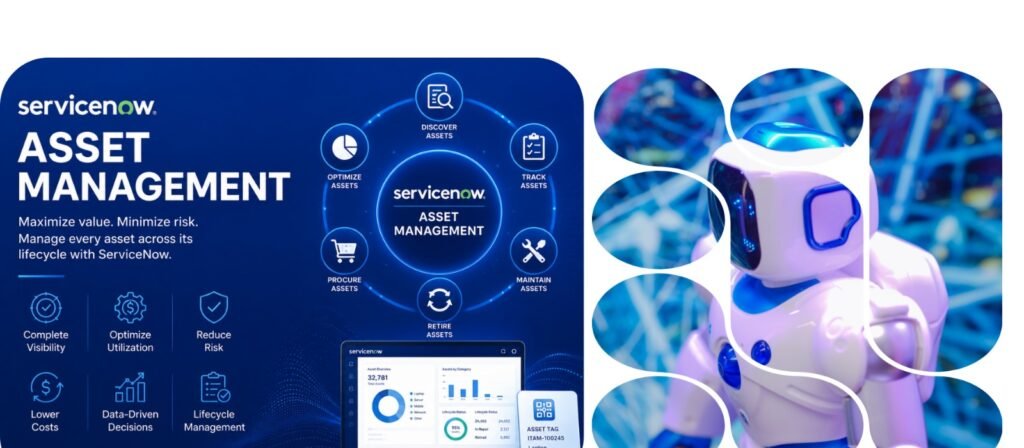
Home » Managing IT assets has become more complicated in 2026 compared to 2015 or even 2015. Back in the day, businesses mostly had to track their desktops, servers, laptops, and software licenses. This was more than enough for any business to maintain the track of its assets. The time has changed now and the landscape is much wider. Companies are dealing with tons of new developments, including remote devices, cloud subscriptions, SaaS tools, mobile assets, security tools, virtual machines, warranties, renewal dates, contracts, etc. At the same time, it is not limited to enterprises or multinational companies. In fact, small businesses are also juggling the same issues. This is where ServiceNow IT Asset Management, popularly known as ServiceNow ITAM, truly becomes useful. IT asset management in ServiceNow can help businesses bring structure, visibility, and automation into managing the entire asset lifecycle instead of simply tracking assets after purchase. ServiceNow may also help organizations plan, procure, Deploy, use, optimize, maintain, and retire these assets. What is IT Asset Management in ServiceNow? In ServiceNow, IT Asset Management is the process of managing all the hardware, software, cloud, and technology-related assets of a company in a single platform. This allows businesses to centralize ways of tracking assets, understanding their usage, managing costs, reducing risks, and even automate everyday asset management. In simple words, ServiceNow ITAM helps answer questions like: What assets do we own? Where are they located? Who is using them? Are we paying for unused software? Are any assets nearing end of life? Are licenses compliant? Are contracts and warranties still valid? Can we reduce unnecessary technology spending? Without using any IT asset management tool, these questions are often unanswered for businesses or they are answered manually, which costs a lot of precious time. Teams may depend on spreadsheets, email approvals, purchase records, etc. that delays the whole process and wastes the time that could have been used to bring more business into the company. Why Businesses Need Better IT Asset Management These days, every business is using technology to deliver its services, but not every business manages technology assets efficiently that may help in the growth as well. This may not be a big challenge for microbusinesses, but as businesses grow, IT assets increase across departments, locations, and users. This growth in IT assets creates several problems. First of all, it increases the cost silently. A business may continue paying for software licenses that no one uses, or it may buy new hardware while usable devices are still unassigned and sitting in storage. Second, the compliance risk becomes harder to manage as software vendors may conduct audits, and the organizations that do not have accurate license data may face penalties or unexpected costs. Experience Servicenow the right way with Avatu Start Today! How ServiceNow ITAM Helps Control Costs ServiceNow IT asset management tool offers various advantages, and one of those is cost optimization. Technology spending can easily become one of the largest operational expenses for any business in the world, but with the right tool, it can be managed. Tools like ServiceNow IT Asset Management does not just provide you with the list of IT assets that a business might have, but it also reduces unnecessary spending in various forms. Managing Software Assets with ServiceNow It can identify unused or underused software licenses that might be costing a fortune to a company. Software Asset Management, also known as SAM, is another important part of ServiceNow IT Asset Management. Hardware might be harder to purchase for a company due to its strong policy, but buying new software licenses or subscriptions is one of the most common ways businesses lose tons of money. Without a proper software asset management process or tool, businesses may overbuy licenses or underuse subscriptions, or accidentally become non-compliant, which is a pretty common instance. Managing Hardware Assets with ServiceNow Secondly, it can support better hardware planning and instead of buying new laptops every time a request comes in, it may check if the IT team has the relevant stock and reuse the devices for better efficiency. When a new employee joins a company that offers laptops or other hardware, it doesn’t always have to buy those devices. Depending on the size, age, and policy of the company, there could be similar hardware already available in the stock that has not been assigned to any other employee. Purchasing the same asset twice has no real value but a burden on the business. Benefits of ServiceNow IT Asset Management ServiceNow IT Asset Management offers several business benefits Better Visibility: Businesses gain a clearer view of hardware, software, and cloud assets across the organization. Cost Control: Teams can reduce waste, reclaim unused assets, avoid duplicate purchases, and make smarter renewal decisions. Improved Compliance: Accurate software and asset data helps reduce audit risks and supports stronger governance. Automation: Routine tasks such as approvals, assignments, updates, reminders, and asset retirement processes can be automated instead of managed manually. Better Employee Experience: Faster and more organized asset workflows ensure employees receive the tools they need with fewer delays. Improved Decision-Making: Leaders can use asset data to plan budgets, forecast future needs, negotiate with vendors, and align IT investments with business objectives. Turn go-live into lasting business success with Avatu’s tailored Automation solutions! Partner with Us! Frequently Asked Questions (FAQs) 1. What is ServiceNow IT Asset Management? ServiceNow IT Asset Management is a solution that helps businesses manage hardware, software, cloud assets, SaaS tools, contracts, warranties, and other technology resources in one centralized platform. It helps organizations track asset ownership, usage, cost, lifecycle status, and compliance more efficiently. 2. Why do businesses need ServiceNow ITAM? Businesses need ServiceNow ITAM because managing IT assets manually through spreadsheets, emails, and purchase records can become slow, inaccurate, and costly. ServiceNow ITAM improves visibility, reduces unnecessary spending, supports compliance, and automates routine asset management tasks. 3. How does ServiceNow ITAM help reduce costs? ServiceNow ITAM helps reduce costs by identifying unused or underused software licenses, avoiding

ServiceNow

Post-Sales Is the Growth Engine: ServiceNow AI is Rebuilding Customer Success

Home » Most companies, including service-based companies, still treat sales as the finish line and mark of their success. Once a deal is closed and revenue is booked, the sales teams consider their job well done. For other businesses, that might be the best-case scenario, but in subscription-based services, that should not be the target. Once a new customer has signed up in a subscription-based business, the real challenges begin for the business. Recurring revenue models has fundamentally changed how a value is created. Companies with subscription-based models should focus on keeping the customers subscribed to their services. If customers in a subscription-based model fail to realize the real value of their subscription, the revenue doesn’t just plateau, it usually erodes. That is why post-sales service is no longer a support function but the core operating system of sustainable growth in these kinds of businesses. Yet, most organizations are not designed to execute this fundamental function. The Structural Failure of Post-Sales Teams In subscription-based systems, customer success teams are expected to be proactive, loaded with data, and strategic to ensure greater satisfaction. On paper, this may look very simple, but systems might make it impossible. Across industries, post-sales teams face three systematic constraints. 1. Fragmented Data Across Systems Scattered data across systems create one of the biggest issues for customer success teams. Usually, customer data is scattered across platforms that include product analytics tools, CRM platforms, ERP systems, etc. Individually, these tools are good, but they are not the best when it comes to helping customer success teams. These systems are rarely synchronized in real-time, that does not show the real picture to the customer success team. 2. Disconnected Teams Across the Lifecycle Disconnected teams across the lifecycle are one of the biggest issues for any company, let alone a subscription model. For a successful subscription model, sales, onboarding, support, and customer support team must operate as a single entity. This collaboration can eliminate common issues that include loss of context, inconsistent customer experiences, and delayed responses. 3. Reactive Instead of Proactive Execution Teams with scattered data and not having a structural platform become reactive instead of proactive. Customer success teams and managers should spend more time on focusing customers and their problems rather than gathering data, preparing reports, or chasing internal updates. These tasks should be automated. ServiceNow’s Approach: Fix the System, Not the Symptoms Similar to other organizational problems, ServiceNow treated this as an operating model problem to help service-based organizations to become the best. Instead of hiring more resources or adding more dashboards, ServiceNow has made a strategic decision to run customer success on the ServiceNow AI platform itself. This has redesigned post-sales around three tightly integrated capabilities that includes: Connected workspaces for unified visibility AI embedded into workflows for execution at scale A real-time data foundation to eliminate fragmentation This approach hasn’t just improved the efficiency, but fundamentally changed the way of working for customer success teams and subscription-based models. 1. Unified Workspaces: A Single Operational View of the Customer By unifying workspaces, ServiceNow has created a single operational view of the customer data is technically the first step in transforming post-sales success. The platform has been addressed through personalized and role-based workspaces that bring together product adoption metrics, customer case history, customer sentiment signals, and renewal timelines. 2. AI as the New UI: From Insight to Action Most companies around the world use AI as a reporting layer that focuses on generating dashboards, forecasts, or summaries. ServiceNow treats AI completely differently as AI is embedded directly into workflows as an execution layer. This gives various advantages to the platform, and the teams can: Instantly generate account briefings Detect risk patterns across customer data Receive recommended next actions Automate routine engagement tasks Using the new capabilities of ServiceNow AI platform, Customer Success Manager can instantly access different data at a single dashboard for better risk and opportunities. What took, what once took hours to pull data from multiple systems and analyze or build a presentation can be done in just a few clicks. 3. Workflow Data Fabric: The Foundation of Everything Workflow data fabric is the foundation of this solution, and none of the above is going to work without solving the most fundamental problem. ServiceNow addresses this through its workflow data fabric, which is a unifying layer that connects data across systems. Without interconnected layers, AI can produce incomplete insights that can worsen the situation as teams operate with conflicting context, and can cause numerous problems. With the help of workflow data fabric, everything gets interconnected and teams can access data at a single dashboard and context flows seamlessly across teams. Experience ServiceNow the right way with Avatu Start Today! RaptorDB and Real-Time Intelligence To support this level of orchestration across teams and data points, ServiceNow relies on RaptorDB. It is a high-performing hybrid database that is designed to handle transactional workflows and analytical workflows simultaneously. This hybrid database can enable real-time customer health scoring, instant detection of portfolio-wide risks, and fast querying across massive datasets faster than ever before. It is highly important to have a hybrid and faster database, as post-sale success isn’t about managing a few accounts, but orchestrating thousands simultaneously without losing precision. Is This Solution Even Practical? Yes, this solution is 100% practical. There are bunch of platforms claiming to have the similar kind of claims, but the ServiceNow has achieved: ~2,000 employees using the system daily Over $6.9 billion in annual contract value managed A 98% renewal rate This is the data point presented by the ServiceNow itself and the tip of the iceberg. The real shift is qualitative. Teams can operate with a shared real-time context, and AI reduces friction in decision-making. This results in customer interactions becoming consistent and proactive. Closing Perspective: Autonomous Customer Success Post-sales is evolving from a human-driven function to a system-driven capability where artificial intelligence can anticipate the needs of the organization and create workflow coordination as per the requirements. In a

Atlassian, ServiceNow

Atlassian vs ServiceNow: Choosing the Right Workflow Platform

Home » Businesses these days have an abundance of digital tools to make their work easier. Despite that, a number of businesses are struggling, not due to incompetency or bad tools, but due to bad workflows. Requests stuck in inboxes, approvals stuck in silos, and visibility disappearing the moment the company decides to scale. That is why focusing on workflow platforms is more important, and choosing the right tool can make a huge difference. Atlassian and ServiceNow are two of the most dominant names as they both are highly powerful and have already proven their usefulness in a number of multinational organizations. Our blog will highlight the practical decision-making and a useful guide to help businesses select the platform depending on their requirements. So let’s dive deep into these platforms. What Do We Mean by a “Workflow Platform”? Before we move to comparing both the platforms, let’s clarify what a workflow platform actually does. In simple words, a workflow platform manages how work moves from request to action, resolution and documentation. It generally includes: IT service requests and incidents Customer or internal approvals Asset and change management Cross-team handoffs Exception handling and escalations As an organization grows, existing workflows become harder to manage through emails, spreadsheets, or disconnected tools. A workflow must have a simple structure, visibility, accountability, and automation for it to work in an emerging organization. That is where platforms like Atlassian and ServiceNow come to play. Atlassian: Built for Team-Driven Workflows Atlassian is one of the preferred and widely accepted workflow platforms for software development teams. These teams highly value speed, autonomy, and collaboration over other features. Over time, Atlassian platform and its tools has expanded into various IT service management and not just limited to the software development teams. How Atlassian Approaches Workflows Jira along with its various tools enable organizations to design workflows that reflect how they actually work rather than using a standard industry-wide process. Atlassian workflows are typically: Decentralized: Different Teams in an organisation own and configure their own processes Flexible: Workflows can expand quickly in an organisation without any heavy governance Tool-centric: Each of its product including Jira, Confluence, and JSM solves a specific problem well Where Atlassian Works Best Atlassian is known for its unique product named Jira. Most organizations adopt Jira first and later add other products over time to develop a broader ecosystem. Atlassian performs exceptionally well in environments where: Teams move fast and iterate frequently Collaboration matters more than rigid process control Engineering, product, and agile practices are central Workflow maturity is still evolving ServiceNow: Built for Enterprise-Grade Operations ServiceNow is a world-renowned platform which is specially designed for large enterprises that allows them to manage their complex IT operations. Platforms solely focus on control consistency and governance in an organization. How ServiceNow Approaches Workflows Servicenow workflows are mostly centralized, governed, and process-driven. It is a single platform that manages workflows across departments for strong role-based access, approvals, and audit trails. From day one, ServiceNow encourages organizations to standardize their workflow for better implementation rather than empowering teams to define their own ways of working. ServiceNow is highly effective when compliance, audibility, and risk management are the priorities of any organization while multiple departments depend on shared workflows. The large scale of any organization introduces complexity that must be controlled via simple solutions. Experience ServiceNow the right way with Avatu Start Today! Choosing the Right Platform: A Practical Decision Framework Selecting one platform can be overwhelming for any organization as we see a lot of businesses asking the similar question, “which platform is better?” Our Servicenow and Atlassian Consultants always focus on what are the needs of an organization, and where that organization is heading in the future. Atlassian Your organization may choose Atlassian if your teams need autonomy and flexibility, while speed of execution is a competitive advantage. At the same time, your processes are evolving rapidly and collaboration is more important than a central control. ServiceNow ServiceNow is perfect for an organization which needs operational consistency while regulatory or audit requirements are non-negotiable. Scale has already introduced complexity in an organization and leadership needs centralized visibility. The choice of selecting a platform totally depends on the needs of an organization. Neither choice is wrong and they both work perfectly in their own sphere. In fact, both platforms can even coexist in an organization when integrated thoughtfully. Conclusion: ServiceNow and Atlassian both are world-class platforms, but they have their own pros and cons. The decision of selection should not be solely based on technology, but the specific needs of an organization. The most successful organizations are not those who pick the most popular or powerful platform, but those who choose the right one that perfectly aligns with their culture, maturity, and long-term view. On one hand, Atlassian offers a great collaboration platform, while ServiceNow offers accountability. Most organizations use Atlassian for product delivery, collaboration, and agile execution, while ServiceNow is typically used for IT operations, governance, and service management. There is no hard and fast rule on which service team is best. We recommend you consult with a professional ServiceNow consulting services or Atlassian consulting services specialists such as Avatu. Turn go-live into lasting business success with Avatu’s tailored Automation solutions! Partner with Us! Frequently Asked Questions (FAQs) Q1. Is Atlassian better than ServiceNow for small businesses? Atlassian platform is considered to be suitable for all kinds of businesses, especially small to medium-sized companies. It offers a wide range of flexible, team-driven workflows that lowers upfront complexity. While ServiceNow typically fits businesses that are at enterprise scale and require strong governance. Q2. When should a company choose ServiceNow over Atlassian? A company must choose ServiceNow when compliance, auditability, consistency, and visibility are crucial for them. The platform is especially suitable for companies that have complex IT operations, strict regulatory requirements, and multi-department service workflows. Q3. Can Atlassian and ServiceNow be used together in the same organization? Yes, you may use Atlassian and ServiceNow together in the

What is ServiceNow
ServiceNow

What Is ServiceNow? A Simple Guide to a Platform

Home » What Is ServiceNow? A Simple Guide to a Platform The world is growing at an unprecedented speed and companies cannot afford to go slow. Even if a company tried to stick to the traditional methods, that company might get lost in today’s cutthroat competition. It is not the technology that is forcing an industry to opt for advanced technologies, but it is the customers that expect faster responses, better customer support, and employees that want simpler workflows. It is the combination of both the employees and the customers that expect an organization to opt for the latest technologies. If you have not opted for the latest tools and processes and are still stuck with your manual processes, don’t worry, you are not the only one doing it. There are tons of businesses out there relying on old systems but in the process of transition. ServiceNow is one of the most popular and leading platforms that can transform your whole business from manual processes to automated business workflows. ServiceNow is not like any other tool or product that only has expertise in just one area, but the company offers a unified platform that can help you improve the process across the entire organization. That’s why today we will explain what ServiceNow is and what it does to help your business completely change the processes. What is ServiceNow? ServiceNow is a world-renowned, cloud-based platform that helps businesses operate more efficiently by automating everyday processes from manual to automated. ServiceNow specializes not just in one tool but a bunch of tools that can be used by an organization of any size. Be it a multinational company or a small business, ServiceNow can help you automate most of the processes. From onboarding employees to approving requests and resolving IT issues, ServiceNow has got you covered. It can automate everyday tasks so that managers and other higher authorities can focus on the right tasks that are going to grow the business. What Makes ServiceNow Different? ServiceNow is not like any other platform in the world. It is not a highly technical platform. In fact, you don’t even have to be technical to use its services. It is a simple and smart tool to automate most of the tasks that a business performs on a regular basis. Most of its tools are built on an idea that every organization uses a specific workflow and those workflows can be automated using technology. Here’s what makes ServiceNow unique. 1. One Platform for the Entire Organisation ServiceNow is a unique platform that has multiple world-class tools for all departments across an organization. Instead of using different tools for different departments, organizations are opting for ServiceNow that has specialized tools for different departments including IT, HR, Customer Service, and Facilities. 2. Easy-to-Use, Even for Non-Technical Teams ServiceNow is a highly easy-to-use tool. In fact, you don’t have to be technical or belong to a technical background to use these tools. Even a non-technical team can easily understand its platform and start working on it from day one. Whether you belong to the sales team or customer support staff, you can easily start using it and collaborate with your peers without needing IT assistance on every step. 3. Centralised Dashboard ServiceNow offers a centralized dashboard to track all the key performance indicators and other parameters with live updates. All this can be tracked on a single screen without making much effort or requiring any communication with the departments. Note: Enterprises working to strengthen IT operations and improve service reliability often leverage BMC Consulting Services to streamline monitoring, automate processes, and enhance overall IT performance. Why Are Businesses Adopting ServiceNow? In today’s digital world, where every business is adopting the latest technology to stay relevant, adopting service now is not a luxury, but a necessity. Companies that are still using and relying on manual processing might face hard time in future as these systems are: Very slow in delivering any service Has high operational costs Often requires long communication Has poor customer experience Usually has workflow bottlenecks If your organization is facing similar challenges and wants a system which is faster in responding to customers and employees, at the same time offers reduced operational costs, ServiceNow is the best platform for you. Our ServiceNow Consulting Services are the best tailored development services for organisations of all sizes. The Most Popular ServiceNow Services. ServiceNow is a world-renowned powerful tool that offers a large number of services to organizations of all sizes. These are the services that can help you transform your business from traditional methods to automation using a seamless and smooth platform. Experience Salesforce the right way with Avatu – your partner for long-term success! Start Today! 1. IT Service Management (ITSM) IT Service Management is one of the core competencies of ServiceNow. A reliable IT support is essential for smooth operations in any organization of any size. ServiceNow is widely recognized as a prominent IT service management tool that allows businesses to enable its IT teams to manage various regular IT related requests. Accelerate your Digital Transformation success with Avatu’s long-term strategies! Let’s Talk! 2. HR and Employee Workflows ServiceNow offers HR workflows that streamlines the entire journey of an employee, starting from onboarding to document submission to all the way leaving the organization. These are the heart of any organization that can influence productivity and retention. It is always recommended to use best-in-class HR and employee workflows to keep the business running smoothly. 3. Customer Service Workflows (CSM) ServiceNow is known for its customer service workflows. It helps businesses completely transform their customer service workflows from old traditional manual work to a modern automated and highly effective operation. Customer Service Agents can understand the context of the customer along with its previous history and offer customized solutions to resolve their issues. Team leaders can track the performance of employees and look at the key performance indicators such as Customer Satisfaction and Service Trends at a centralized dashboard.

Why is the ServiceNow Platform Essential for Modern Business Operations?
ServiceNow

Why is the ServiceNow Platform Essential for Modern Business Operations?

Home » Why is the ServiceNow Platform Essential for Modern Business Operations? Picture this: a business where processes are flowing seamlessly, IT issues are resolved before they become disruptions, employees are getting the support they need, and customers are enjoying a smooth experience. Sounds dreamy, right?  In the current, fast-paced, technology-driven business landscape, companies are constantly under pressure to simplify workflows and achieve commendable collaborations for enhanced competitiveness. The challenges? Offering outstanding customer services while tackling multiple systems, juggling priorities, and ensuring smooth workflows. This is where the ServiceNow platform appears as a game-changer. It operates as a unified system that exceeds its role as an online cloud platform to transform IT service management and other functions, including customer service, HR, and security. But how exactly does ServiceNow transform modern business operations? In the following blog, we’ll explore all about ServiceNow, which makes it an asset for any modern company. Why wait, then? Come, let’s dive in!  Key Challenges in Modern Business Operations ServiceNow’s solution demands complete knowledge about existing business issues for their resolution. These issues include:  Siloed Systems and Data: Diverse independent systems and tools result in unsuccessful data transfer, causing operational lags and data losses across the organization.  Rising Customer Expectations: Businesses must generate customized accelerated services without interruptions because customers demand such experiences.  Complex IT Environments: IT infrastructure becomes challenging to handle because cloud computing, IoT systems, and hybrid work arrangements have gained extensive adoption.   Manual Processes: Operations slow down, and mistakes accumulate due to obsolete manual workflow methods.  Security and Compliance Risks: As cyber threats increase, businesses must implement strong security measures while adhering to constantly evolving regulations.  The challenges above highlight the need for a unified, intelligent platform to simplify operations, enhance collaboration, and drive business growth. This is where the ServiceNow platform comes into play.  Many organisations modernising their workflows often begin by exploring specialised ServiceNow Consulting Services, which help them redesign processes, reduce inefficiencies, and build scalable digital foundations. Features of the ServiceNow Platform That Empower Businesses ServiceNow serves as an extensive platform which enables organizations to reinvent their operational systems. Following are some notable features of the ServiceNow platform:  Businesses looking to improve customer experience and unify their sales operations often rely on Salesforce Consulting Services to implement the right CRM strategy and maximise the value of the Salesforce platform. 1. Unified Platform for All Workflows ServiceNow enables businesses to combine their IT, HR, customer service, security and other operations into a unified platform. This promotes effective communication between departments by removing organizational barriers.  2. Automation and AI-Powered Insights The platform uses AI and ML to automate repetitive tasks, forecast issues before they occur, and provide actionable insights. For example, the Predictive Intelligence feature assists businesses in anticipating and resolving IT incidents proactively.   3. Customizable Workflows The ServiceNow platform utilizes its low-code development environment for businesses to create workflows which align specifically with their organizational requirements. This flexibility of ServiceNow ensures that the platform is capable of adapting to evolving business requirements.   4. Integrated IT Service Management The ITSM capabilities of ServiceNow allow businesses to handle IT services efficiently, from incident management to change management and much more. This guarantees minimal downtime and optimal IT performance.   5. Customer Service Management Through the CSM module, the ServiceNow platform provides businesses with tools to manage cases effectively and automate responses while delivering a 360-degree view of customers to agents.  6. HR Service Delivery ServiceNow’s HR Service Delivery module streamlines employee onboarding, offboarding, and other HR processes, improving the employee experience and freeing HR teams to concentrate on strategic initiatives.   7. Security Operations The Security Operations module allows businesses to identify, prioritize, and respond to security threats in real-time, guaranteeing robust protection against cyberattacks.   8. Scalability and Cloud-Native Architecture ServiceNow offers cloud-native scalability, which benefits businesses at every organization scale. It has scalable capabilities which allow your organization to grow without compromising its value.  Benefits of Adopting the ServiceNow Platform In a world where speed, agility, and seamless collaboration define success, businesses demand more than just technology – they require transformation. The ServiceNow solutions by Avatu Private Limited aren’t just an upgrade but a game-changer that simplifies operations, improves productivity, and fuels innovation. Following are some benefits that demonstrate how ServiceNow can transform the way your business works:  1. Improved Efficiency and Productivity ServiceNow minimizes operational inefficiencies and allows employees to concentrate on higher-value tasks by automating manual processes and simplifying workflows.   2. Enhanced Customer Experience Businesses use various tools such as CSM and AI-powered chatbots to deliver faster, more personalized customer service, resulting in higher satisfaction and loyalty.   3. Cost Savings ServiceNow’s analytics and reporting tools offer real-time insights into business performance, allowing for data-driven decision-making.   Teams aiming to improve project visibility, collaboration, and DevOps performance frequently turn to Atlassian Consulting Services to optimise tools like Jira, Confluence, and the rest of the Atlassian ecosystem. 5. Increased Agility The platform enables businesses to use its low-code environment for fast adaptation to market changes and customer needs, ensuring competitive performance.  Use Cases: How Businesses Thrive with ServiceNow From simplifying IT operations to improving customer experiences, businesses across industries use the ServiceNow platform to drive efficiency, innovation, and growth. The following are some real-world examples where ServiceNow’s intelligent automation enables organizations to convert challenges into opportunities:  1. IT Service Management for a Global Retailer  A renowned retail chain leveraged ServiceNow to centralize its IT operations across diverse locations. The retailer minimized IT downtime by 30% and enhanced service delivery by automating incident management and simplifying change requests.   2. Customer Service Transformation for a Telecom Company A telecom provider adopted the ServiceNow CSM module to boost customer service operations. With the help of AI chatbots and case management tools, the platform decreased average resolution times by 40%, which boosted customer satisfaction.  3. HR Process Optimization for a Financial Institution  A financial services firm automated employee onboarding and offboarding processes using ServiceNow’s HR Service Delivery module. The implementation cuts down processing durations by half while advancing

Scroll to Top